



 12
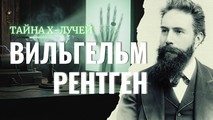 One November evening in 1895, a discovery was made that changed the history of medicine. Professor Wilhelm Röntgen stayed late at work in the laboratory at the University of Würzburg.
The scientist wrapped the Crookes tube in black cardboard, turned on the current — and suddenly, at the other end of the dark room, a paper screen covered with crystals of barium platinocyanide began to glow softly. The tube was sealed tightly; light could not pass through the cardboard. This meant that some kind of invisible radiation was passing through the space. Röntgen called it X‑rays.
A month and a half later, he took the famous photograph of his wife’s hand with her wedding ring on, and a couple of months after that, doctors were already using the new rays to search for bullets and fractures. Thus, medicine acquired a “new vision.”
We invite you to watch a new video presentation, where you will learn:
- how the future Nobel laureate ended up without a certificate;
- how a lucky turn of events and a meeting with a mentor completely changed his fate;
- why Röntgen refused to patent the discovery that could have made him a millionaire.
Back to all news catalogue
 +375 152 446802


Full-text Database of Intramural Publications



The Network Electronic Library














Resources for Scientists

Virtual Exhibitions

Website navigator for distance learning

Video Tutorial

Basics of Information Culture













 Scientific Medical Library